Showing posts with label Books. Show all posts

Review: The Art of ... Volume 05 Tommie Soule

by Hansrainer


Hey jungle folks, 

 
this is Hansrainer again with the next title in the series: a review of the fifth book in The Art of... series by Dave Taylor Miniatures,


which shows you the work and tips of famous mini painters from different backgrounds and styles. This book is different from the other books in the series, which were more about the artistic vision and philosophy of the featured painters, because this book is mostly a practical guide to the basics of mini painting, written by Tommie Soule (a.ka. the_miniature_painting_tutor, a well known pro painter and teacher with over 20 years of experience in the hobby.

Tommie addresses the fundamentals of miniature painting along five main themes, each one about a basic part of mini painting, like having the right mindset, keeping your paint consistent, loading and shaping your brush, putting the brush on the model, and finishing more models. The book has the chapters set up accordingly: first, an intro that tells you what the topic is about and why it matters; second, a detailed explanation of the stuff and techniques that Tommie Soule uses, with pictures and steps that show you how; third, a summary of the main points and tips to keep in mind.

The best thing about the book is how clear and simple it is. Tommie Soule doesn't expect you to know or do anything already, and he tells you everything from the beginning, in a friendly and easy way. He doesn't confuse you with too many choices or variations, but he focuses on the most important and effective ways that he's learned over the years. He also reminds you to practice, try things out, and find what you like, and he helps you to find your own style and voice. The book is not supposed to be a complete or final guide, but rather a strong base that you can use and change as you want.

The book is also really well illustrated and made. The pictures are big, sharp, and colorful, and they show every step and detail of the painting process. The captions are helpful and short, and they go with the text without repeating it. The layout is neat and easy to follow, and the font is nice and fancy. The book is printed on good glossy paper, and the cover is hard and pretty. The book looks and feels great, and it shows the professionalism and passion of both the author and the publisher.

The Good

This book could be one of if not the best book on learning the basics of mini painting. It's a no nonsense approach but that's what makes it a must read for people who want to actually learn mini painting and not just go wow over painted minis.

The Bad

The Art of ... Tommie Soule is very different from any of the other books in the series I've read so far (1,2,3,6,7) and if you think it's going to be a book about the artist's journey and views with a bit of tutorial in there - that's NOT what you're getting.

The Ugly personal view

As I said before, this book is probably up there on the "must read" shelf by itself with Kirill Kanaevs Miniature Painting FAQ a.k.a "the Bible". I totally recommend it. It deals with the basics of the craft (not color theory, not volumetry, not concepts of composition but ACTUAL craft basics) in a way that I haven't seen in a video tutorial or any of the other books I have. If you're a beginner, a struggler or a wannabe painter - get this book. Read it, work through it - you'll probably learn a lot.

And that's it for today. Talk to you soon,

Hansrainer


Review: The Art of ... Volume 03 Ana Polanšćak

by Hansrainer


Hello and welcome back dear jungle readers,


This is Hansrainer and I welcome you to the review of the third Volume in the Series "The Art of..." - by Dave Taylor Miniatures. This book is all about the Croatian artist Ana Polanšćak, a household name in the grim dark scene. In contrast to many other sucessful miniature artists, Ana has no professional background in the worlds of arts and crafts and is wholly self-educated in her impressive skill-set of illustration, painting, photography etc. Before she authored this book, she had already a prolific output in her blogging activities, that culminates in her current website and older entries can still be found on her now inactive blog.

Ana has what I would call a profoundly integrated approach to painting miniatures, crafting her art and illustrations, gaming and telling stories. This approach and her very unique style are what makes this book very special. Again, before I go into the nitty-gritty details of the review, I need to disclose, that the book was lent to me by my friend Maren, who herself enjoyed the book tremendously. 

The basics are completely in line with the other books of the series: Silver embossed writing on the matte hardcover, it is well bound with a thread binding and includes a cloth ribbon page marker. The pages are high quality paper and the print quality is excellent. As mentioned in the past, the layout could be a tad more adventurous and the slightly marbled and speckled page background can at times be a tad irritating.

As with previous books of the series, Volume 03 has a certain biographical touch, the author providing us with a good insight where she is coming from and where here interests and focus lies. The first section "where I come from and where I'm going" gives a brief overlook and mentions many points and steps that will be covered more in depth later in the book.

 "World building" is the title of the second section and takes up roughly a third of the book. Ana gives us a good insight into her work processes and the factors and motivators that drive her. It becomes absolutely clear that pretty much everything she creates is embedded in one of many rich and flavorful settings she has and keeps crafting as a major part of her work, sometimes collaborating with other artists following a similar approach. The second very interesting thing is her strong tie into narrative gaming - and the emphasis is on narrative here. She introduces us to a series of small projects and warbands, created to fit seamless into worlds, locations, and stories. The pictures that illustrate that part of her work make that particularly obvious: They are all about telling a story, conveying atnosphere, generating a feeling - nearly not at all about showing off the painterly prowess of her work. In fact, the painterly aspect seems very subdued and relegated to serving the narrative. Unfortunately that impedes the photos a bit - for my taste they tend to be quite dark and it's hard to make out much of the painted models, unless it serves a narrative purpose.


The third section, "Gardens of Hecate" introduces Ana's own world, where the work on several warbands and concepts lead to the creation of compelling fictional world. Atmospherically, I would compare her work to what we see in games like Diablo, but with a clear focus on the small world: counties instead of countries - the scale stays relatable. I have to admit, that at this point I realised that the book was not at all what I expected, but that I enjoyed it reading it, nonetheless. Ana does a great job laying out her creative and thought-processes, which approaches proved to be successful and which lead to problems in the settings consistency further down the road.

"Dark Age of Sigmar" is the fourth section of the book, where we see where her journey took Ana past the Gardens. Again we are introduced to new Warbands and Factions and several small settings she created. But here the focus lies more on how she created multiplayer narrative events in these settings, the challenges she encountered and the tools she used to overcome them.

The last ten pages are dedicated to Ana's journey into sculpting miniatures and unique pieces. Again its interesting to follow her, and her depictions of mummifyed saints and reliquiae are terrifying to behold (at least to me).


Conclusion

The Good: This book is special - it's weird in a good way. If you like grim dark fantasy art, strong concepts with a lot of follow through - this is the book for you. If you like narrative gaming, maybe even Inquisitor or similar games - this book is likely for you. Even though I am personally into neither, I did enjoy reading it. Its the kind of "hm, interesting" book that opens a new world for some. On top of that it contains a chunk of good starting points and pages where one could start to look if you want to got deeper down that well. 

The Bad: The image quality varies - quite a bit. I was really intrigued by the scenic and narrative pictures and everything thats "within the narrative" so to speak. I was, however, not so happy with the "this is just the model" photos. I found them all very dark on the brink of underexposure - and from a painterly view, I'd have enjoyed to see more. I'd particularly have loved a bit more detailed, high level resolution views of the heavily converted models.

The ugly personal view on the book: For me its a mixed bag - I actually almost always enjoy books that deviate from the step-by-step, "this is how my model evolved"-template many authors seem to follow. I am really happy for a book and a perspective that basically doesn't really care that much about how different models where done and even the "why" is only circumstancial. It was actually a good read. On the other hand - I usually expect some reuse value from a book like that (and that might be a misguided expectation) in the way that I see myself go back there for advice "how to" or inspiration or such. In this case this is not likely for me, because its honestly not my cup of tea. Overall the style is a bit too dark, to sullen and gloomy for me. But as the header says: That's personal taste. 

Overall, had I bought the book for the full cover price of ca. 32€ I would not regret it. If you're into that art-style, its amazing. If you're into narrative wargaming its a really good read too. If you enjoy reading the views and woes of other artists - this is another valuable perspective.

I hope the review could interest you in the book or resolve some questions - I'll be back with volume 4 in a few weeks!

Cheers,

Hansrainer

Review: The Art of ... Volume 02 Christof Keil

by Hansrainer

Hello dear jungle readers,


this is Hansrainer welcoming you to the second review in my Series on "The Art of …" by Dave Taylor Miniatures. As with the last volume, I procured the review copy myself, again a friendly loan by a member of my local community, Oliver.

The second volume is at the same time the first that follows the by now customary format of the series: A monograph by a single artist - in this case Christof Keil, a miniature artist and blacksmith from Germany.

To be fair and as mentioned in the last article, the journey to review all of the "The Art of …"-Books started somewhere in early 2023, but then life happened. To be honest, Christof's book was the first of the whole series I saw and when I took a first look at it, I was not terribly impressed. While I am a huge fan of John Blanche and his Artwork, I cannot say the same for the style of dark and grimy miniature painting he inspired with the "blanchitsu"-Movement back in the day. This first impression wasn't helped by the fact, that the act of assembling and building models before painting (and in this vein kit bashing) is something that I loathe. So, from here on out, please take everything I am writing with a grain of salt...

BUT - in the end, you shall not judge a book by its cover and a monograph about the work of an artist not by just cursory leafing through the pages and looking whether you like the shiny pictures. And so, after quite a hiatus, I eventually sat down on a quiet afternoon to read the book. And what can I say - I read the 110 pages in one sitting.

Christof's work in this book is mostly in the realm of smaller miniatures (28-32 mm), more specifically it mostly focuses on Games Workshop - but given the huge impact those worlds had on many, if not most of the painters in the current hobby community, that's not necessarily a bad thing. And in fact, I would actually recommend it for most hobbyists interested in modding and building hero scale miniatures in that scale range.

The content

The book features roughly 110 amply illustrated pages, the quality (and size!) of the photos is mostly good to very good. Its printed on a high quality glossy paper, thread bound and with a good solid hardcover with some silver embossed titling - the production value is pretty high.

Beginning with a foreword by Tommy Soule and a short introduction, The Art of Christof Keil starts off with some clarifications of terminology and the basics of Kit bashing - including tools and a number of examples. 


The first section - aptly titled "Kit bashing" consists of a number of short articles on individual projects of varying sizes, focusing on the concepts, ideas and the workflow behind the projects. It culminates in a slightly longer tutorial, in which the conversion process is shown in a lot more detail and step by step. For me as somewhat of a GW-Fan, most of the kits and parts mentioned in passing are familiar. However, that might not be the case for a more general audience - I would have preferred  a more detailed labelling of the pictures, maybe even with arrows for specific parts and how they looked before and after integration into the kit bash. I think its a missed opportunity - and if Christof does another book in the future, I would find that really helpful. All in all, the part was good though and it even got me thinking of a few simple conversions for future projects in the small scale.


The next section is on the Black Phallanx, essentially a love child where Christof really starts to put together a coherent, strongly individualized force with its own lore and background. And while a hardcore puritan GW-Fan might find the deviation from standard design patterns disturbing, I was really impressed what he designed and put together: Especially his HALO-strike team and the second big suit were really awe inspiring.


The third section deals with his foray into larger scale models, especially Busts and here I liked especially his elaborations on how he learned to sculpt, first in Busts and how that change of medium again helped him to improve to become more free on his smaller scale conversions.


Chapter 4 - Adeptus Astartes - is all about space marines, space marine conversions and his well known black templar diorama, inspired by the cover art of the 3rd Edition Box Set of Warhammer 40k. Again, he lets us participate in the thoughts and considerations as well as the limitations of the medium that informed and shaped the creation of this piece as well as a small number of other Astartes works.


The final chapter - Food for Thought goes into the depths of thoughts and ideas that had and have an impact on Christof's work. To be frank, these kind of introspective insights are usually what makes it worth spending the time and read a book by an artist. And he does not disappoint here.


Conclusion and judgement :)

The Good: All in all, the book provides some satisfying insights into the processes and considerations at the foundation of this artists works. Its not just that, it has its tutorial aspects, the pictures of Christof's work over the last few years and some solid ideas how to tackle certain aspects from a craftsmanship- or sometimes organisational perspective.

The Bad: My main criticism is at times the implicitness with which the author assumes a quite high level of familiarity with the world of Warhammer 40k and also recent and older kits. Here it would have been really helpful to be even more explicit in the selection and preparation of parts for the kit bash - although admittedly that might have been nigh impossible given the fluid nature of his process.


The ugly personal view: To me personally, it seems that the author got better and better in finding his voice as the book goes on. Chapter 1 can be a bit lengthy and somewhat repetitive but it definitely picks up from here. 

For me, this book is a clear recommendation if you are interested in:

  • Christof Keil
  • kit bashing tabletop models
  • in well converted Grim-Dark model
  • artists' work and thought processes
  • blanchitsu


Its not so much a recommendation if you are looking for:

  • loads of information on painting
  • painting instructions

I hope this review was informative and helpful - looking forward to reading Volume 03 - the Art of … Ana Polanscak.

Yours,

Hansrainer

Review: The Art of … Volume 01 Miniature Monthly

by Hansrainer

Hello dear Jungle readers,


this is Hansrainer with the first of a lengthy series of reviews on "The Art of..." book series by Dave Taylor Miniatures. Dave started this series with a first Kickstarter in April 2021 to fund the production of the first three volumes. He followed up roughly a year later with Volumes 4-6 and a third one with Volumes 7-9 last year. So far, every Kickstarter has been very successful with more than a thousand backers - doesn't sound like a lot but our community is not exactly gigantic - and so the result is pretty darn impressive.

I only learned about the series roughly a year ago, just in time to miss the last Kickstarter and I got access to the books via Oliver, a friend who was kind enough to loan me the first six books. Initially I had the goal to get the reviews done before the publication of Volumes 7-9 but - as it tends to - life happened. I had the reviews of book two and three completed quite quickly, but with this first one it was a bit tougher - I had read it roughly a year ago and unfortunately in this case time doesn‘t make the best editor.

After that time what stuck with me was that this book really delivered a unique view into painting miniatures from what we are used to in the diverse books and series in existence. Similar to "A Colourful Mind" this book contains descriptions of the personal journey of the three artists that were crucial in the foundation and running of the Miniature Monthly painting collective: Aaron Lovejoy, Elizabeth Beckley, and Matt DiPietro. The book is separated into three main Sections, one for each of the three.

Each section contains strong biographical parts that describe the way and development of the artists as well as personal views on specific projects, experiences, philosophies and thoughts that shaped their journey and development to becoming the artists and persons they are today. Each section also contains content more directly tied into the authors' specific ways of creating their content and miniature art, many examples of their work and ideas what to take for the readers own journey.

Aaron Lovejoy


Aaron's section is the one most closely tied to Miniature Monthly's history - no wonder given that it was him who created  Miniature Monthly in the first place. We learn about the challenges of working in the miniature industry for a living - this in and by itself very interesting inside view is already a very good argument to get the book for everyone interested in venturing down this path herself. 
 
 
He goes the whole nine yards from the challenges and pitfalls to things that work and also how to stay relevant and alive from an artistic as well as economic point of view.
 
 
He addresses many interesting points, like the different challenges different kinds of art for hire projects deliver - army painting vs. display, box art vs creating online content, how he balances personal and business projects, how to learn and incorporate new skills like airbrush or digital sculpting and 3D-printing. The last few pages are dedicated to a few of his favourite pieces:
 

All in all its mostly the documentation of a personal voyage but there is a lot of wisdom and experiences to be taken from that.

Elizabeth Beckley


The second section is written by and about Elizabeth Beckley. It starts again with a biographical chapter that starts with her upbringing and background and then focuses on her by now lengthy career working in the painting business. Starting out as a private commission painter, not unlike Aaron before, then quickly graduating to work for companies like Impact Miniatures and later as a studio painter for CoolMiniorNot and finally working freelance and founding her own small company as well as joining Miniature monthly and painting for many more companies.
 

After this section she dives more into the practical aspects of her career and I personally really enjoyed the parts where she connected her classical fine art background with working on miniatures. She connects aspects like composition, colour selection and how to use specific details to create and lose focus. She repeatedly goes back to the importance of using references, especially when it comes to the human form and creating specific results. 


The final note is a page with direct advice for aspiring miniature artists, drawn from her experience in teaching as well as creating art. All in all a very interesting take again and I have to admit I love the whimsicalness of many of her works - would love to get to meet her one day and see her work in real live!
 

Matt DiPietro


The final section of the book is by Matt DiPietro, the third pillar of the Miniature Monthly team. Beginning with the biographical part, I still find it very interesting how many of the great miniature painters have at least some family roots in the fine arts - and Matt is not the exception it seems. The biography starts with his youth and then moves into his career as a professional artist, starting out in the warehouse of Privateer Press and then slowly migrating over to the studio team with Mike and Allie McVey and Ron Kruzie and finally taking over the position as lead painter later on. Eventually he started his own studio - Contrast Miniatures - and joined the Miniature Monthly team in 2017, as of the writing of this book, he spends his time creating content, teaching and creating art.
 
 
Like the other two authors of the book, Matt by now has a very strong focus on teaching and this shows in the more practical parts of his chapter. He puts a strong focus on sketching and underpainting: Be it for purposes of defining Lighting and Drama, establishing material properties like reflectivity or texture or even more vivid skin and other materials be creating a lot of variance using (sometimes multi-coloured) underpaintings.
 
 
In a very interesting, though brief, foray into the more artsy aspects of miniature art, he addresses some inherent conflicts many aspirants of hour hobby face as time progresses: The struggle between technique and expression, dealing with the limitations of the medium, painting against sculpts, deviating from traditional or seemingly "right" colour compositions for certain subjects and finding ways to express ones own voice. 
 
 
The final pages of the chapter are dedicated in more detail to three specific works of his and conclude the book.
 

My Impressions and Conclusion


The Good: The Art of Miniature Monthly is an impressive first entry into a series that we now know has been going strong for quite a while now.  With Volumes 7-9 just released and the Kickstarter for 10-12 on the near horizon, there is no end in sight. The concept of the book being more of a biographical thing with large bits of knowledge sprinkled in between is very attractive to me as a reader: I like reading about people and the art they create. I love the fact that the book isn't yet another "how to colour-theory" and "how to volumetry" thing.

The Bad: If you are looking for the typical "this is how you paint X" or "this is how X-Skill/Technique works" kind of book - this is NOT for you. In hindsight and with the knowledge of how much deeper this can go, if each artist has a whole book to expand in from the follow up books in the series, it feels like it falls a bit short. Some, if not many of the pictures could be a bit better - but that's owed to the biographical curse of "dammit I should've taken wayyyy more pictures"…

The ugly personal view: I think this is a book worth buying and reading. If you are interested in the hobby business, if you are interested in any one of the three artists, if you care for their view of the world: get this book. If you are interested just in shiny pictures and looking for that one pro-tip to level up your painting: There are other books for you - and we in the Massive Voodoo jungle have a growing selection of reviews on numerous such books.

I think I will actually pick this one up, even though I have already read it now (actually close to twice) and that's saying something.

See you for the the next review!

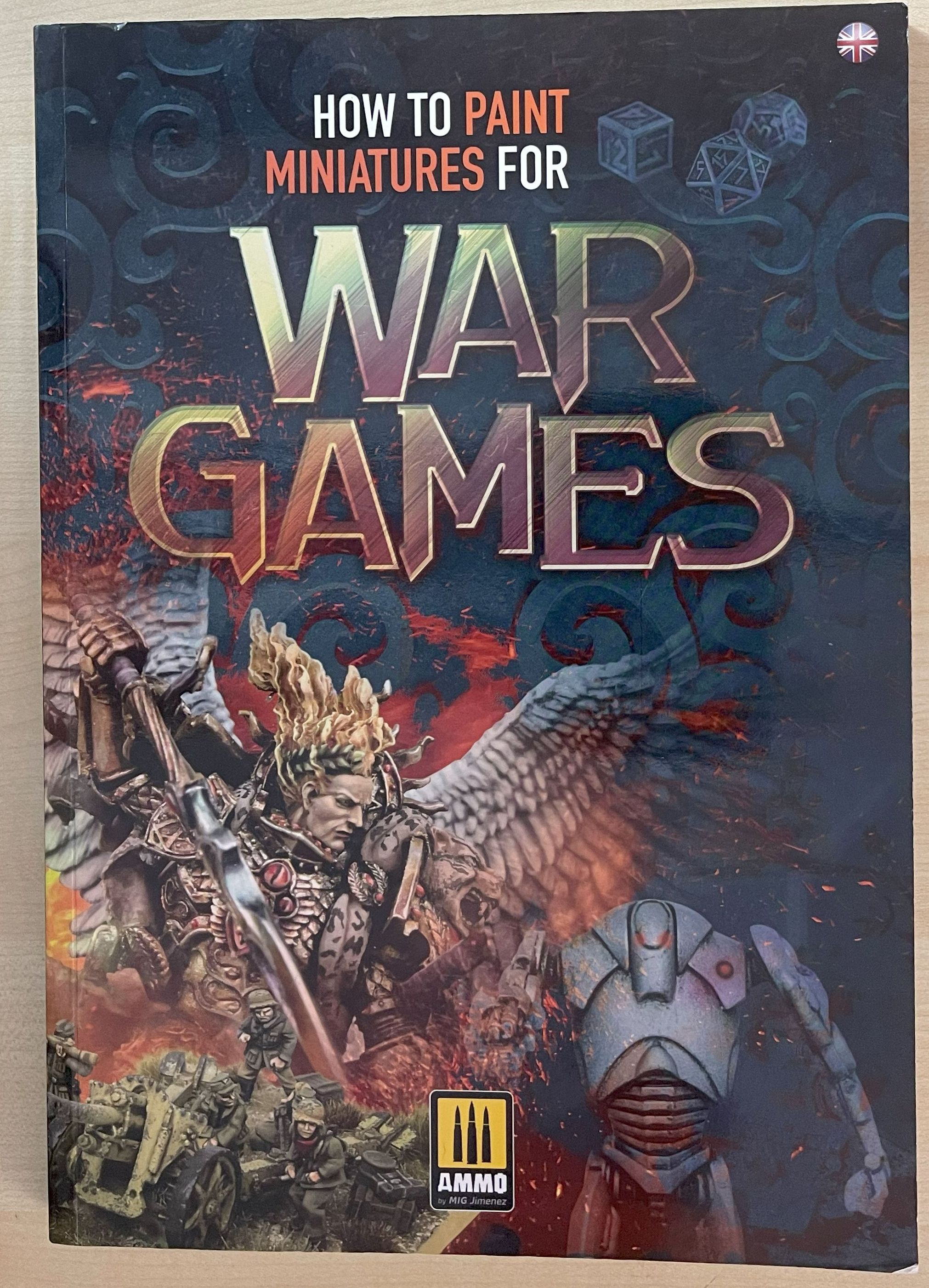
REVIEW: "How to paint miniatures for War Games" by Rubén Torregosa, Published by Ammo by MIG Jimenez

by Hansrainer

Hello and Welcome to my next Massive Voodoo review, 

today I will give you my view on the new book "How to paint miniatures for War Games" from Ammo by MIG Jimenez


For me, army painting is a very special topic/sub-genre in the miniature painting hobby, one where it all started for me and whenever life gets busier (family, work…) this is the field I return to, when I feel like I need a place where I can feel safe and some measure of success is ensured. There is a certain Zen-level attached to cranking out minis, grinding through a heap of work and I can reach a deep feeling of satisfaction, when an army comes together on a table (or my showcase) painted for the first time.

Having said that, there is not that much literature on this specific area out there (apart from the books by the big British elephant in the room) and so I was really pleased when I was given the opportunity to take a look at this book. 

Full disclosure first: I was given a review copy by the publisher and did not buy it with my own money. 

But now, without further ado: let's get down to business: 

The Basics: 
How to paint miniatures for War Games has the same high quality paper, cover and production values which have become the standard for books by Ammo. It consists of 168 full color pages, is unsurprisingly richly illustrated and clocks in at a recommended resales prices of 34.95€. Its available in English, French and Spanish and my review is based on the English language version. It is an ensemble product, with content provided by several authors, all of them accomplished painters and hobbyists in their own right. Main editing credits go to Rubén Torregros, who also wrote the general part. 

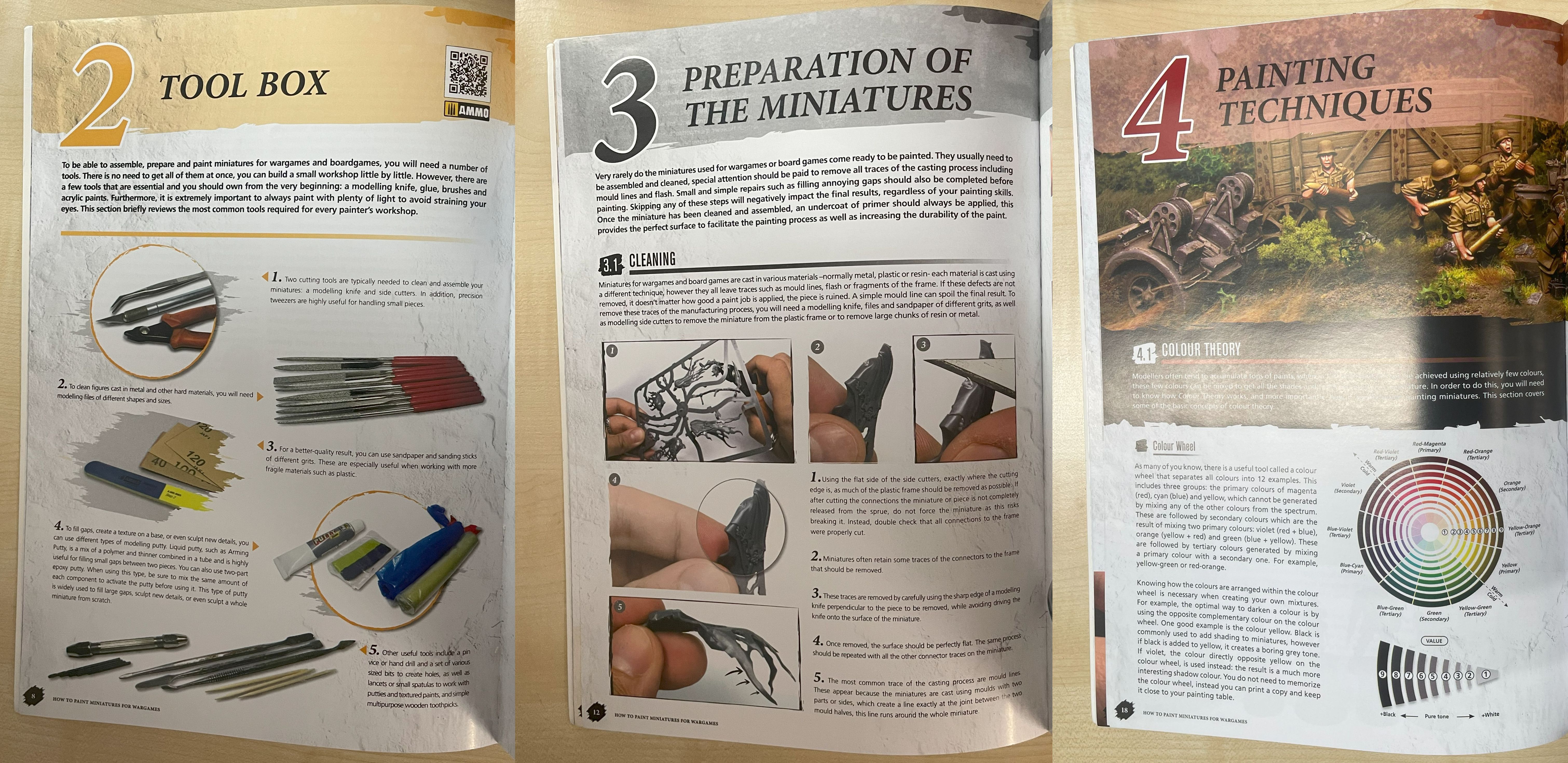
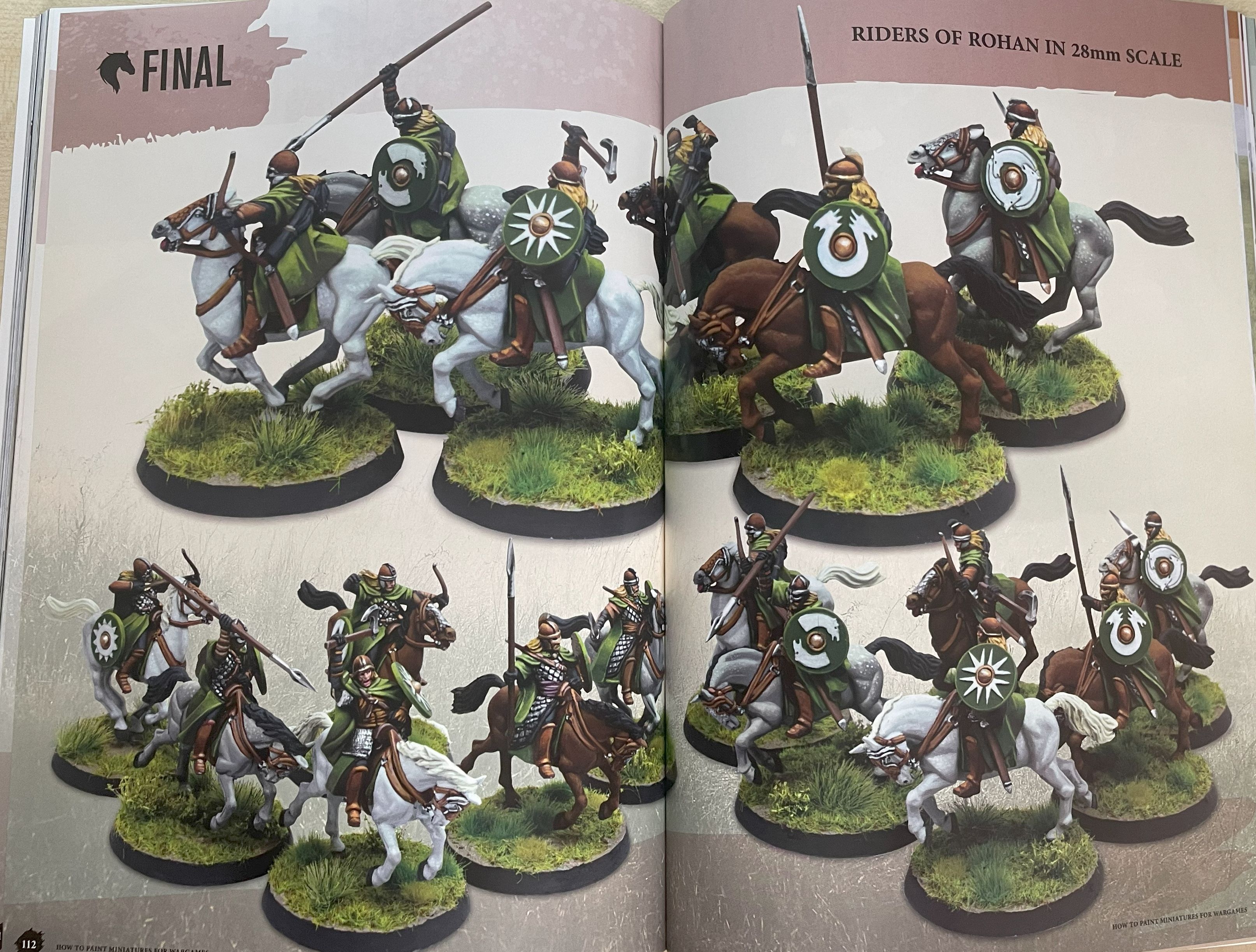
The book is broken up into two major parts: A more general section providing an introduction, a section on tools and preparation, a number of painting techniques and section on how to create bases for the miniatures. This part takes up just a bit more than a third of the overall volume. The second part, entitled as "Masterclasses", then uses the remaining 100 pages to go through seven example projects, where specific artists basically employ and combine the various techniques from the first part of the book to create very nice looking armies.
After reading a book cover to cover, I usually like to break up my reviews into three parts: Talking about the good, the bad and my ugly opinion about the product as a whole. So let's dive in: 

The Good:
How to paint miniatures for War Games is a great entry point into painting miniatures for war games - this sounds a bit silly, but I think it's very important to stress the point, that this book fills a niche usually reserved for the products of a large British company. The book addresses all the basics: From the tools, to types of paints, brushes and the preparation of the models, every important basic topic for miniature painters is covered. Obviously, the example tools and paints in the illustrations are the Ammo variety as far as available. The preparation ends of course - with  priming the assembled miniatures. 

The chapter on painting techniques starts with a quick rundown on color theory. There are some really valuable tips in there, but don't expect it to go into all that much depth. It then spends a page on brush handling and care, a page on thinning and consistency of paint and finally dives into basic painting techniques, like color blocking, dry brushing, washing, wet blending and layering. 
This part is a bit confusing to the more experienced painter, as some content here is redundant, even within this book. However, I do believe the sequence of  explaining and introducing certain techniques might provide a better entry point for a beginner, without swamping the reader with details. After the basic techniques we get an introduction into basic weathering techniques, a good way to make up for inconsistencies during the actual paintjob. 
Finally there is a short chapter on creating interesting and easy bases for the models. 

What I actually really liked here is the limitation to basic and mostly easy techniques, as well as the consideration of and examples for simplifications - abandoning realism and detail for effect at times. Sometimes good enough is just good enough. Rubén also goes into some details about the effects of scale on the viewers perception. Overall, I would have loved to have the impact of playing with the audiences perception playing a bigger role and being covered in more detail. 

From there on out, its Masterclasses:
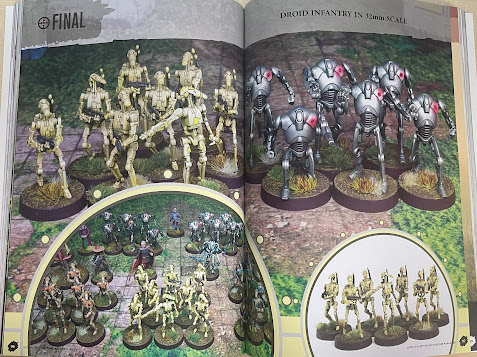

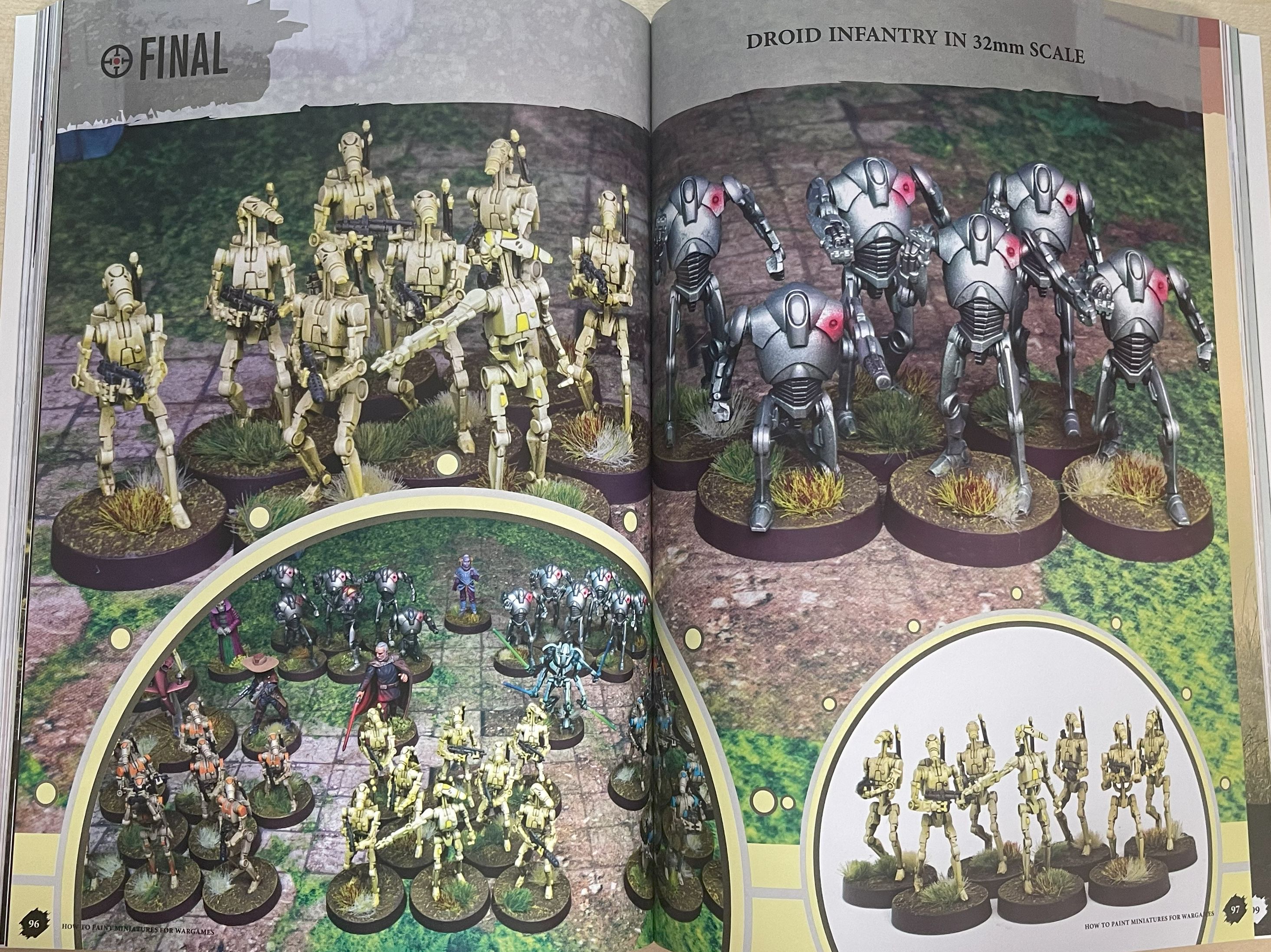
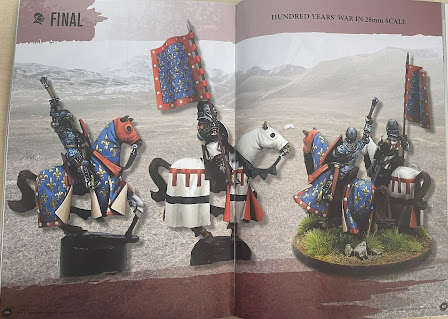
 Masterclass here means: We get an in depth, step-by-step overview of a specific project painted by an experienced painter. This is in my opinion the part where the book begins to shine and where it starts to really deliver. The different projects all use and refer different techniques presented in the first section of the book - but now they are placed into a context. The authors do not only convey the "how" of the painting process, (something for which I personally consider videos oftentimes more helpful than books - but that's a different discussion) but they explain the "why" of the decision for or against a specific technique. Be it the quite quick and high contrast painting of 15mm DAK Artillery, or my personal favorite, the Droid Infantry project by Omar Olabi. Omar employs techniques like Enamel washes in a really simple and effective way to create a great looking Star Wars Droid Army with just a handful of steps. Other masterclasses, like the Spanish Tercios in 15 mm are a bit more off-course for my taste, as the elaborate techniques presented here will likely lead to much longer painting times, increasing the chances for frustration in the novice painter. 


The Bad: 
Assuming How to paint miniatures for War Games is addressed to beginners in the hobby world, I would have generally preferred it to spend a bit more time on the basics of preparation up to priming. While the book does a good job addressing all the basic points, it really falls short when it comes to pitfalls and mistakes to avoid. To illustrate this, I'd wish the authors would have spent a paragraph or two on the challenges of priming. At least a few words on preferable temperature/humidity conditions for can priming could have been really helpful for the beginner. 
In general, I was a bit sad that the book didn't even touch on topics such as overall visual composition of an army on the table, or the fact that the sheer number of models and viewing distance often makes painting armies more forgiving. 
It also does not really delve into paint project organization: How do I decide what quality I want to paint? How do I factor my available time in or what my expectations are, when the project is to be finished and so on. Admittedly, these are topics rarely, if ever, touched by books about miniature painting, but that would have been a chance for this book to stand out. Even though, it is a good alternative to the increasingly hard to get books on the topics from said big company. 


The Ugly Opionion (tl,dr): 
How to paint miniatures for War Games by Ammo is a good book for the beginning army painter. It touches all the basic topics required to tackle, when someone wants to get a miniature army ready for the battle field. It gives a good introduction in and overview of techniques and methods commonly employed for painting gaming miniatures and provides practical examples and ideas what to employ when and why. For the experienced painter, the section with the masterclasses will be far more interesting and helpful. And while I think it's a good book, I am a bit saddened due to the missed opportunities in this case. - Maybe thats something worth writing about in a blog post for the future.

I would love to hear your thoughts on it as well.